
You might not notice it at first. A small rub on your gum or a faint taste that lingers. Or maybe your denture now shifts when you talk or eat.
It’s tempting to blame the denture. But often, the real culprit is our daily habits. These habits can quietly change how well your denture fits, feels, and smells.
This guide will show you how to avoid five common mistakes that can harm your dentures. You’ll learn simple tips to keep your dentures looking natural, feeling stable, and smelling fresh.
The good news is that caring for dentures is easy. A quick routine each day can make a big difference. It can prevent problems like staining, odour, sore spots, warping, cracks, and a loose fit.
Dentures need special care because they can scratch or change shape. They sit on living gum tissue, which can get irritated or infected if hygiene is poor. Good denture care leads to better comfort, cleaner breath, and fewer surprises at mealtimes.
Key takeaways
- Small daily habits can affect denture fit, comfort, and oral health over time.
- Use denture care tips that protect both the denture material and your gums.
- The best practices for caring for dentures are quick and easy to follow each day.
- A simple routine helps avoiding denture problems like odour, stains, and sore spots.
- The benefits of good denture care include longer wear life and a fresher feel.
- Partial dentures need the same care focus, plus attention to your natural teeth.
Why your dentures can wear out faster than you expect
Your dentures face a tough environment every day. If you don’t keep up with care, they can wear out and smell. It’s not just about looks; it’s about feeling good and staying healthy.
Dentures live in a “hostile” environment
Your mouth is always changing, with hot and cold foods and drinks. This can wear down your dentures. Bacteria and chewing forces make it even harder.
Most dentures are made of acrylic, which can warp with heat. Metal parts in partial dentures can also get damaged. Harsh cleaners can harm materials, making good hygiene key.
How small daily habits affect comfort, fit, and oral health
Skipping cleaning lets plaque and food build up. This can cause bad smells, stains, and sore spots. It also changes how your denture fits.
Using the wrong cleaners can make things worse. Scratches trap bacteria, leading to gum problems and bad breath. Good care keeps surfaces smooth and comfortable.
| Everyday habit | What it can do to your dentures | What it can do to your mouth |
|---|---|---|
| Rinsing only and skipping a proper clean | Faster staining, odour, and sticky plaque film | Gum inflammation and sore spots from trapped debris |
| Cleaning with regular toothpaste or harsh powders | Surface scratches that hold bacteria and pigment | More irritation and bad breath risk as biofilm builds |
| Using hot water to rinse or soak | Warped acrylic and a looser, less stable fit | Pressure points that can rub and create ulcers |
| Wearing dentures for long stretches without a break | More build-up under the denture base | Higher risk of fungal irritation and tender tissue |
Early warning signs you shouldn’t ignore
Your mouth often gives you clues before big problems start. Look out for sore spots, red areas, and burning feelings. White patches that wipe off easily can mean a fungal issue.
Other signs include bad taste, dentures feeling loose, cracks, and pain when chewing. Staying on top of hygiene and maintenance helps catch these early. This way, you can enjoy your dentures without worry.
Sleeping with your dentures in overnight
It’s easy to leave your dentures in at night. You might feel they’re secure or don’t want to deal with them when tired. But wearing them all night can harm comfort and fit over time.
For new denture wearers, remember what happens at night. Your mouth works, bacteria grow, and tissues need rest. A simple nightly routine is key to avoiding problems.
Why your gums need a break to “breathe”
Your gums and the tissue under your denture face constant pressure all day. Taking them out at night gives your tissue a break. It also lets saliva clean your mouth and make it feel fresh in the morning.
This is the best time for denture hygiene. With the denture out, you can clean it well and gently clean your gums, tongue, and palate. This removes build-up that can harm your tissue for hours.
What continuous wear can lead to: irritation, infection, and bone loss risk
Wearing dentures all night can cause sore spots and swollen gums. You might notice rubbing, blisters, or cracked corners of the mouth. Some people get headaches or ear pain if the bite feels wrong.
Continuous wear also raises the risk of fungal infection. It shows as redness, burning, or white patches that wipe off. Spotting it early helps manage it with your oral health team.
Another concern is faster bone changes in the jaw. Wearing dentures all the time can make them loosen and move. If you notice movement or pressure, a fit check and denture relines and realignment can help.
Best practice: remove at night and soak correctly
Take your dentures out before bed and soak them in plain water or a denture cleaning solution. Rinse them well in the morning before wearing them again. Soaking products aren’t meant to be swallowed.
Keep your routine simple so it becomes a habit. These hygiene practices help avoid problems like odour, stains, and inflamed gums. They also make your dentures last longer.
| Night-time habit | What you might notice | What it can lead to over time | Better swap |
|---|---|---|---|
| Sleeping with dentures in | Dry mouth, morning soreness, rubbing marks | Irritation, higher infection risk, faster looseness as tissues change | Remove before bed so your gums get a break |
| Not soaking overnight | Dentures feel rough or less fresh | Build-up that’s harder to remove, more odour and staining | Soak in water or a denture solution overnight |
| Putting dentures in without rinsing | Odd taste, mouth feels “chemical” | Unneeded exposure to cleanser residue | Rinse thoroughly before wearing in the morning |
| Ignoring early fit changes | Clicking, movement, sore spots when chewing | More pressure points and higher chance of cracking or damage | Book a fit check; act early for comfort and function |
For new denture wearers, night removal is part of normal care. It’s simple and keeps your mouth comfortable every day.
Skipping a consistent daily denture care routine
Skipping daily care lets build-up grow fast. Food, plaque, and calculus stick to dentures like on real teeth. This film traps smells, dulls colours, and causes sore spots.
It’s not just the denture that suffers. Biofilm against gums can irritate and increase stomatitis risk. The American College of Prosthodontists suggests daily brushing and soaking with a non-abrasive cleanser to fight biofilm.
How plaque and food debris cause odour, staining, and sore spots
The “furry” denture feeling is usually plaque and particles. If ignored, it turns into calculus, which is tough to remove and roughens the surface. This rough surface holds more bacteria, leading to bad breath and stains.
Not cleaning the tissue-contact side can push bacteria and yeast against gums. You might see redness, feel burning, or notice small tender spots. These signs mean it’s time to improve your daily cleaning routine.
A simple four-step routine that takes about five minutes
-
Rinse after every meal: Remove dentures and rinse under cool water. This step removes particles that cause stains and odours.
-
Brush once daily: Use a denture brush or a soft toothbrush. Choose a non-abrasive paste or unscented soap. Gently brush all surfaces, including the gum side.
-
Soak overnight: Soak in plain water or a cleaning solution. Use effervescent tablets to lift plaque; rinse well before wearing.
-
Brush your gums and tongue in the morning: Brush gums and tongue before wearing dentures. This clears overnight build-up, freshens breath, and spots irritation early.
Keep your denture care simple and consistent. Regular cleaning is better than harsh, long sessions that can damage materials.
Extra care if you wear partial dentures and still have natural teeth
Partial dentures put extra stress on anchor teeth. This can lead to plaque and weaken teeth. If teeth decay or fracture, the partial fails, not because it wears out.
Brush and floss natural teeth daily. Clean around clasps on partials when brushing. A good daily routine, along with natural tooth care, keeps dentures comfortable and fresh.
Using regular toothpaste and abrasive cleaners
Brushing your dentures with regular toothpaste might seem right. But, many toothpastes are made for natural enamel, not denture bases. Knowing what your cleaner does is key for good denture care.
Why standard toothpaste can scratch acrylic and create micro-retention zones
Standard toothpaste has abrasive particles like silica or alumina. These can scratch acrylic dentures, dulling their shine and changing their feel.
Over time, these scratches can form micro-retention zones. These areas trap residue, making cleaning harder.
How scratches can encourage biofilm, stains, and bad breath
Rough surfaces attract biofilm, leading to stains and bad breath. This is true for grooves, clasps, and the underside touching your gums.
Minerals can harden into calculus, irritating your gums. This makes cleaning your dentures a daily challenge.
| Cleaning choice | What it can do to the denture surface | What you may notice day to day |
|---|---|---|
| Regular toothpaste (often with silica or alumina) | Can dull acrylic and create fine scratches that hold residue | More odour, more staining, and a “film” feel that returns quickly after cleaning |
| Abrasive household cleaners | Can roughen and weaken materials over time, raising crack risk | Sharper edges, more sore spots, and a denture that looks older sooner |
| Non-abrasive denture cleanser + soft-bristled brush | Helps lift biofilm while keeping the surface smoother | Fresher feel, less staining, and easier proper denture maintenance |
What to use instead: non-abrasive denture cleanser and a soft brush
Switch to a non-abrasive denture cleanser and a soft-bristled brush for gentler cleaning. For a paste, try Dr. B Dental Solutions Cleanadent Denture and Gum Cleansing Paste. It’s made for prosthetics and gently removes odour, stains, and adhesive film.
For effective cleaning, rinse first, then use a small amount of denture paste on a soft brush. Brush all surfaces for two minutes, focusing on crevices and the underside. Rinse well to avoid leftover residue.
Cleaning or soaking dentures the wrong way
It’s easy to think a quick scrub is enough, but small slip-ups can shorten the life of your plate and leave your mouth feeling off. If you’re learning how to clean dentures, focus on gentle steps and the right products, not speed.
Hot water and heat exposure can warp the fit
Heat is a quiet troublemaker. Even briefly running your dentures under hot water can soften the acrylic base and warp the shape, which can ruin the fit.
Stick with cool or lukewarm water every time you rinse, brush, or soak. This is one of the best practices for caring for dentures, because a stable fit helps reduce rubbing, sore spots, and rocking when you chew.
Soaking in mouthwash (even alcohol-based) can be harsh on materials
Soaking dentures in mouthwash sounds fresh, but it can backfire. Alcohol-based mouthwash can be harsh on acrylic and may affect metal parts on partial dentures over time.
Keep mouthwash for your mouth, not your denture cup. For practical denture care tips, choose products made for dentures and follow the soak time on the label.
How to clean dentures properly: rinse, gentle brush, then soak overnight
A steady routine is the simplest way to keep your dentures clean and comfortable. When you’re unsure how to clean dentures day to day, use this sequence and you’ll cover the basics without damaging the surface.
-
Rinse after meals under cool water to wash away food debris.
-
Gently brush once daily with a dedicated soft denture brush and a non-abrasive denture cleanser. If you’re caught short, plain unscented liquid hand soap can work.
-
Soak overnight in a denture solution or plain water. Effervescent tablets like Polident or Efferdent can help lift plaque and biofilm; rinse well before you wear them again.
To avoid damage, don’t use hard-bristled brushes, and never use harsh chemicals or bleach on dentures. These best practices for caring for dentures keep the finish smoother, which helps limit stains and odour.
| Common habit | What can go wrong | Safer choice for daily cleaning |
|---|---|---|
| Rinsing under hot water | Acrylic can warp, changing comfort and fit | Rinse with cool or lukewarm water |
| Soaking in alcohol-based mouthwash | Can be harsh on acrylic and metal components over time | Use a denture solution or plain water for overnight soaking |
| Scrubbing with a hard-bristled brush | Creates scratches that hold plaque and stains | Use a dedicated soft denture brush |
| Cleaning with bleach or harsh chemicals | Can weaken materials and irritate your mouth | Use a non-abrasive denture cleanser or unscented liquid hand soap |
Poor storage and handling that leads to cracks or breakage
Your dentures might seem strong, but they’re not. A small slip or leaving them out can cause damage. Simple habits can prevent problems that start with small chips.
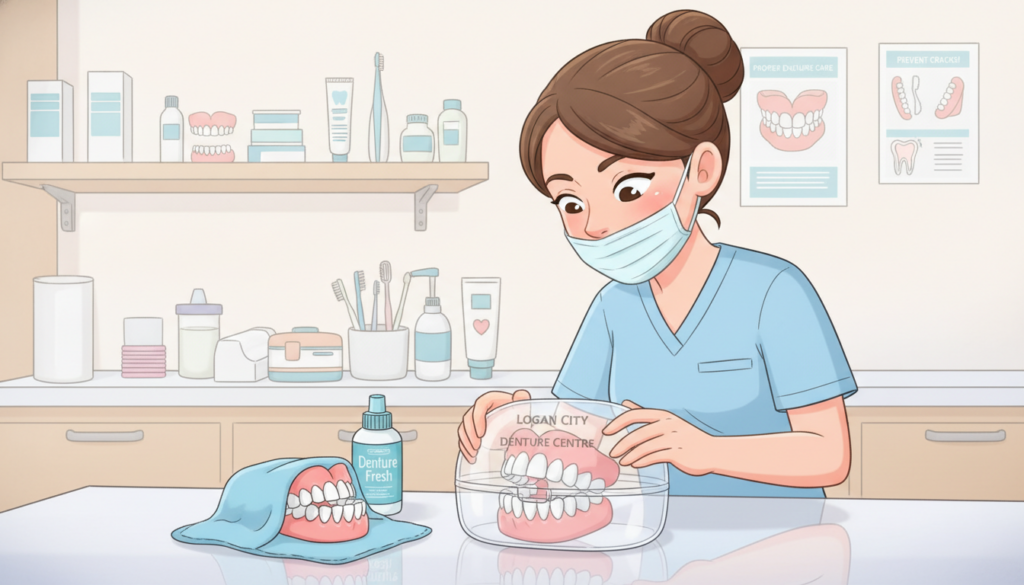
Why letting dentures dry out can warp or crack them
When dentures dry out, they can change shape. This can cause discomfort and make them more brittle. Over time, they might crack.
Heat is also a risk. Hot water can soften or distort the acrylic. This can affect how your denture fits.
Prevent drops: clean over a folded towel or a sink filled with water
Most breaks happen during cleaning, not meals. Dropping dentures on a hard sink can cause fractures. Clean over a towel or fill the sink with water to cushion them.
- Hold your dentures with two hands when brushing.
- Rinse gently so they don’t shoot out of your fingers.
- Keep your cleaning items in one spot to avoid rushing.
Smart storage: plain water or a denture solution (lukewarm, not hot)
Store your dentures in plain water or a soaking solution. Use lukewarm water. This helps maintain their shape and reduces stress.
| Storage choice | What it helps with | What to watch for |
|---|---|---|
| Plain water (lukewarm) | Keeps dentures from drying out and helps maintain fit | Change daily so odour and film don’t build up |
| Denture soaking solution (lukewarm) | Supports hygiene between brushes and can reduce staining | Follow the label time; don’t “over-soak” as a habit |
| Dry storage (open air) | Convenient during short handling only | Higher risk of warping, brittleness, and avoiding denture problems becomes harder |
| Hot water | Feels like it cleans faster, but it doesn’t improve fit | Can distort shape and lead to discomfort and loosening |
Keep storage steady and handle your dentures carefully. These small changes make daily wear more predictable.
Missing check-ups and wearing dentures that no longer fit
Your mouth changes over time, and so can your dentures. Your gums and jawbone can shrink, making your denture feel loose. Regular check-ups are key to keeping your dentures fitting right.
Worn-down teeth can change how you chew. This can make eating harder and wear out your dentures faster. Regular dental visits can help avoid these issues.
Why your mouth changes over time and dentures may loosen
Your denture fits your mouth perfectly at first. But as your tissues settle, the fit can weaken. This can trap food and cause irritation.
A dentist can spot problems you might miss. They can check for fungal irritation, cracks, and uneven bites. These checks are crucial for keeping your dentures in good shape.
What to book: denture fit checks every 6–12 months and relines every 2–3 years
Book a denture fit check every 6–12 months. You might also need a reline every 2–3 years. This keeps your dentures comfortable and functional.
| Appointment | How often | What your clinician can assess and adjust | What you may notice if it’s overdue |
|---|---|---|---|
| Fit check | Every 6–12 months | Tissue health (sore spots, redness, burning, white patches that wipe off), bite balance, fit and stability | Rocking, food under the plate, speech changes, new pressure points |
| Denture inspection | At each review | Acrylic integrity, cracks and chips, tooth wear, clasps or attachments on partials | Clicking, sharp edges, looseness, uneven chewing |
| Professional clean | As needed at reviews | Ultrasonic removal of calculus and deep stains that home cleaning can’t shift | Persistent odour, bad taste, stubborn staining |
| Reline | Commonly every 2–3 years | Reshapes the fitting surface to match tissue changes and improve the seal | More adhesive use, ongoing rubbing, denture lifting during meals |
When to call: sores lasting 5–7 days, new pain when chewing, cracks, or persistent odour
Call us if a sore spot doesn’t heal in 5–7 days. Also, if you experience new pain or notice cracks in your denture.
Don’t ignore bad tastes or odours that won’t go away. Red or raw areas, burning, or white patches need attention. If you see any lumps or colour changes, book an appointment quickly.
Call us on 3209 1557
Call us on 3209 1557
denture care tips for avoiding denture problems long-term
Small habits can make a big difference in comfort. Good denture care is more than just brushing. It keeps your denture smooth, your bite steady, and your mouth calm.
These practices also help you catch small issues early. This prevents sore spots and a loose fit. For new denture wearers, start with a simple routine of weekly and monthly checks.
Weekly deep-clean soaks and monthly at-home inspections for cracks and rough spots
Once a week, soak your denture in a cleaner made for stains and tartar. These cleaners are stronger than daily ones, so follow the directions and rinse well.
Some people use vinegar for cleaning. But check with your dentist first. Avoid harsh chemicals or bleach that can harm your denture.
Once a month, inspect your denture in bright light. Look for cracks, chips, loose teeth, or dull spots.
Run a clean finger over the inside surface and edges. If you find sharp spots or new ridges, get an adjustment.
Remove denture adhesive fully each evening to protect fit and hygiene
If you use adhesive, remove it fully each night. This keeps your denture fitting right and prevents food and bacteria buildup.
These tips are simple but effective. Clean away build-up and then brush as usual. This keeps your denture care consistent.
Look after the mouth under the denture: brush gums and tongue, hydrate, and monitor irritation
Cleaning the denture is just the start. Brush your gums, palate, and tongue each morning. This clears plaque and boosts circulation. Rinse with warm salt water or a non-alcoholic mouthwash if needed.
Dry mouth can cause dentures to rub and increase fungal risks. Drink water all day. If medication dries you out, talk to your dentist about saliva substitutes.
If you wear partial dentures, protect your natural teeth. Brush twice daily, floss every day, and get professional cleans. This keeps your teeth and gums strong.
| Cadence | What you do | What you’re checking for | Why it matters for comfort |
|---|---|---|---|
| Weekly | Deep-clean soak with a stain and tartar denture cleaner, then rinse thoroughly | Film build-up, lingering odour, stubborn stains around grooves and teeth | Helps keep surfaces smooth so plaque is less likely to stick and irritate your gums |
| Monthly | Inspect in bright light and run a clean finger along the fitting surface and edges | Hairline cracks, chips, loose teeth, rough spots, sharp edges | Early detection lowers the chance of sore areas and sudden breakage |
| Nightly (if you use adhesive) | Remove adhesive from gums and denture before cleaning and soaking | Sticky residue in grooves, build-up along the border, trapped debris | Supports a stable fit and reduces bacterial load near the gumline |
| Daily mouth care | Brush gums, palate, and tongue; hydrate; note any tender patches | Redness, swelling, persistent irritation, dry mouth signs | Keeps tissues healthier under the denture and improves day-to-day tolerance |
Conclusion
Your dentures can fail early for simple reasons you can fix. Big mistakes include sleeping in them, skipping daily cleaning, and using abrasive toothpaste. Wrong soaking methods and rough handling also play a part.
Missing fit checks can lead to sore spots, stains, odour, and a loose bite. It’s important to catch these issues early.
The best way to care for your dentures is with a steady routine. Rinse them after meals with cool water and brush gently each day. Use non-abrasive products for cleaning.
Soak them overnight and clean your gums and tongue daily. This keeps your mouth healthy.
For proper denture maintenance, pay attention to details. Check monthly for cracks or rough edges and deep-clean weekly. Remove adhesive each night to prevent buildup.
Book check-ups every 6–12 months. Relines may be needed every 2–3 years as your mouth changes.
Act early with these denture care tips. If you’ve had soreness longer than 5–7 days, or new pain when chewing, get a review soon. Ignoring discomfort can make fixes harder than they need to be.